
New Agentic AI Solves Warehouse Slotting Drift

Managing Director, Pre-Sales
Connect on LinkedIn
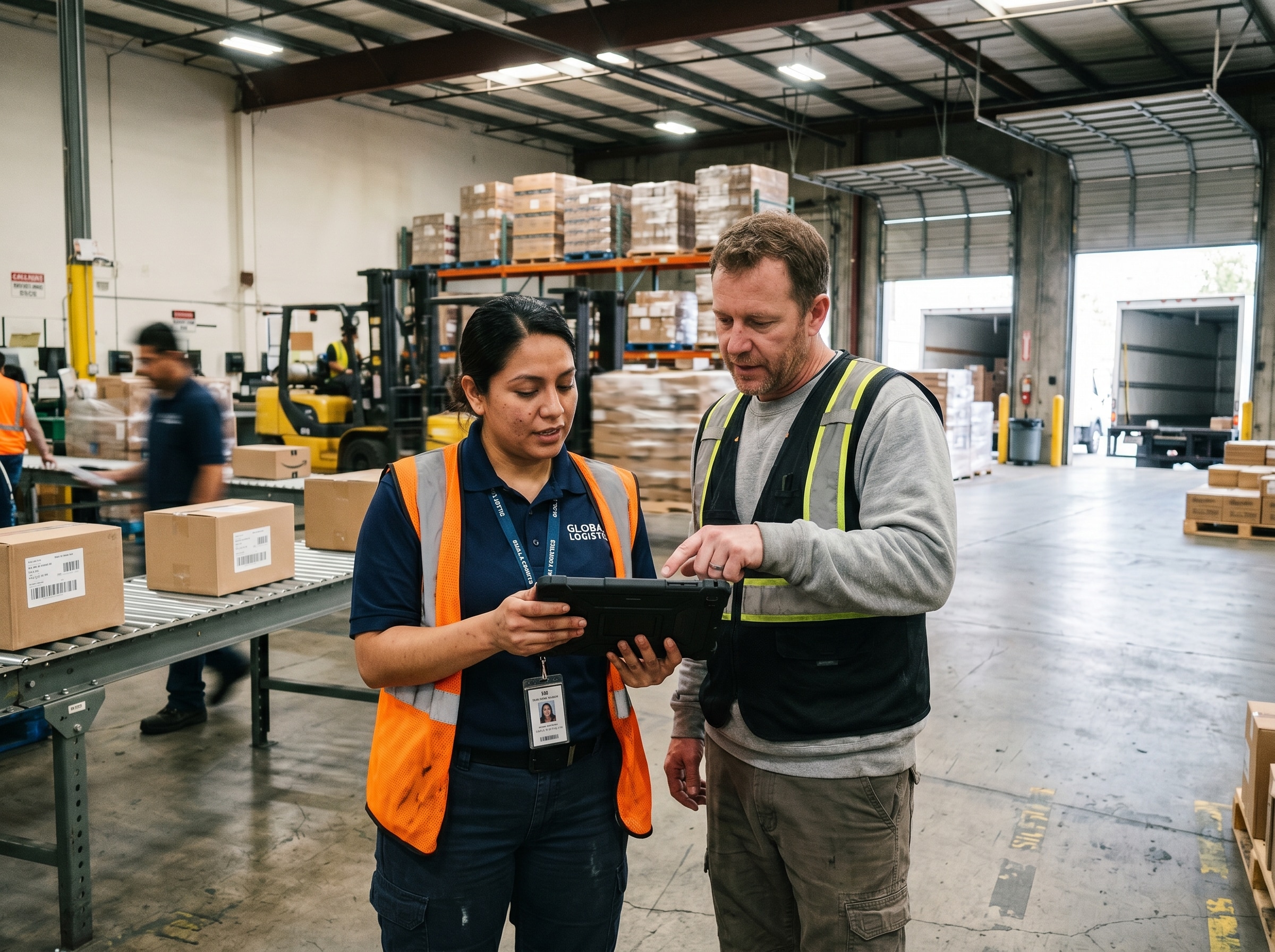
Like you, I’ve been in the distribution business for quite some time. We both understand that warehouse slotting is an essential component of successful operations because it’s the leverage point for improving throughput.
But we’ve always been constrained with two less-than-ideal options: either execute a bunch of manual data tasks or use expensive and complicated software systems to generate the analysis. And despite shifts in demand, labor, order profiles, etc., both approaches only capture the state of an operation at a single point in time.
This gap between plan and reality creates longer pick paths, more frequent replenishments, unnecessary congestion, and reduced throughput. Put plainly, warehouse slotting information drift is costly.
To maintain accurate slotting while reducing manual work and the need for complex technology investment, an operating model needs access to continuous demand, SKU, and labor information… and the intelligence to deliver decisions accordingly. The day AI met these requirements, I was all in on building the solution.
This gap between plan and reality creates longer pick paths, more frequent replenishments, unnecessary congestion, and reduced throughput. Put plainly, warehouse slotting information drift is costly.
The Timing and Capacity Constraint
Slotting has never lacked decision logic. In fact, the discipline is well understood. High-velocity items belong in positions that reduce travel, pick faces need to reflect demand, similar items should be separated where mispicks are a risk, and heavy items should be stored where they can be handled safely and efficiently.
The challenge sits solely in how often those decisions need to be reevaluated.
A warehouse generates constant movement data. Item history, work history, location attributes, replenishment activity, and picking behavior all create signals about where warehouse slotting is helping and where it is starting to work against the operation. The issue is not whether the information exists. The issue is whether a team has the capacity to interpret it continuously and act on it before the cost compounds.
The truth is: humans just can’t keep up. Manual analysis takes time, standalone software requires unsustainable upkeep, and project-based re-slotting delivers moments of improvement, then quickly loses relevance.
Meet the Slotting Optimization Agent
Properly configured streaming data and a decision schema allow for a decision process tied directly to live warehouse input. That’s why my colleagues and I built the Warehouse Slotting Agent.
The Warehouse Slotting Agent sources operational inputs on an ongoing basis:
The AI agent evaluates current warehouse conditions and recommends fixed item locations based on the current state. It surfaces optimal fixed locations by item to meet a target replenishment number per day. Users can use the Copilot chat interface to ask for more detail or prompt the agent to dig deeper into a particular inventory item.
The agent operates directly within Dynamics 365, where warehouse data and execution already live, so decisions can translate into action without leaving the system.
Continuous Evaluation and Reduced Operational Workload
A good slotting optimization model should reduce operational burden, remove manual review effort, cut down on stale decisions, and shorten the path from signal to action. Continuous evaluation supports smaller, ongoing corrections that are easier to absorb than broad resets. The warehouse is always closer to an efficient state because it handles drift as it appears, providing:
What is agentic AI for warehouse slotting?
Agentic slotting is an embedded AI system that monitors warehouse activity and recommends slotting changes on its own. It uses current data to identify where placement is starting to work against throughput.
How can AI improve warehouse slotting?
AI slotting replaces periodic re-slotting projects with ongoing adjustments. Instead of reacting after performance drops, it flags when item placement no longer matches real demand and updates recommendations continuously.
Shifting the Warehouse Approach
Warehouse leaders have spent years choosing between manual work, periodic projects, and software that often carries more upkeep than the operation can justify. The result is a gap between what the warehouse data can reveal and what teams can realistically act on.
A continuous slotting agent closes that gap, creating a clear marker for where operations can go next. Slotting can function as an ongoing decision system. It can stay aligned with live demand, labor constraints, and SKU churn. It can support throughput without requiring a team to rebuild the model every time conditions change.
After years of rebuilding slotting plans to catch up to the operation, you (and I) can finally keep slotting decisions aligned with it.
I’m hosting a limited number of complimentary working sessions to help warehouse leaders audit their current data paths and pinpoint where manual upkeep is slowing things down.

AUTHOR
Managing Director, Pre-Sales at MCA Connect
Steve Shebuski has more than 25 years of experience in modernizing and optimizing supply chain and fulfillment operations. A recognized thought leader in distribution, he has contributed to leading supply chain publications and collaborated with Microsoft’s engineering team on the development of WMS in Dynamics 365. With deep expertise in digital transformation, solution architecture, and analytics, Steve helps organizations build smarter, more agile operations.
Steve was named a 2026 Pros to Know Leader in Excellence by Supply & Demand Chain Executive.
